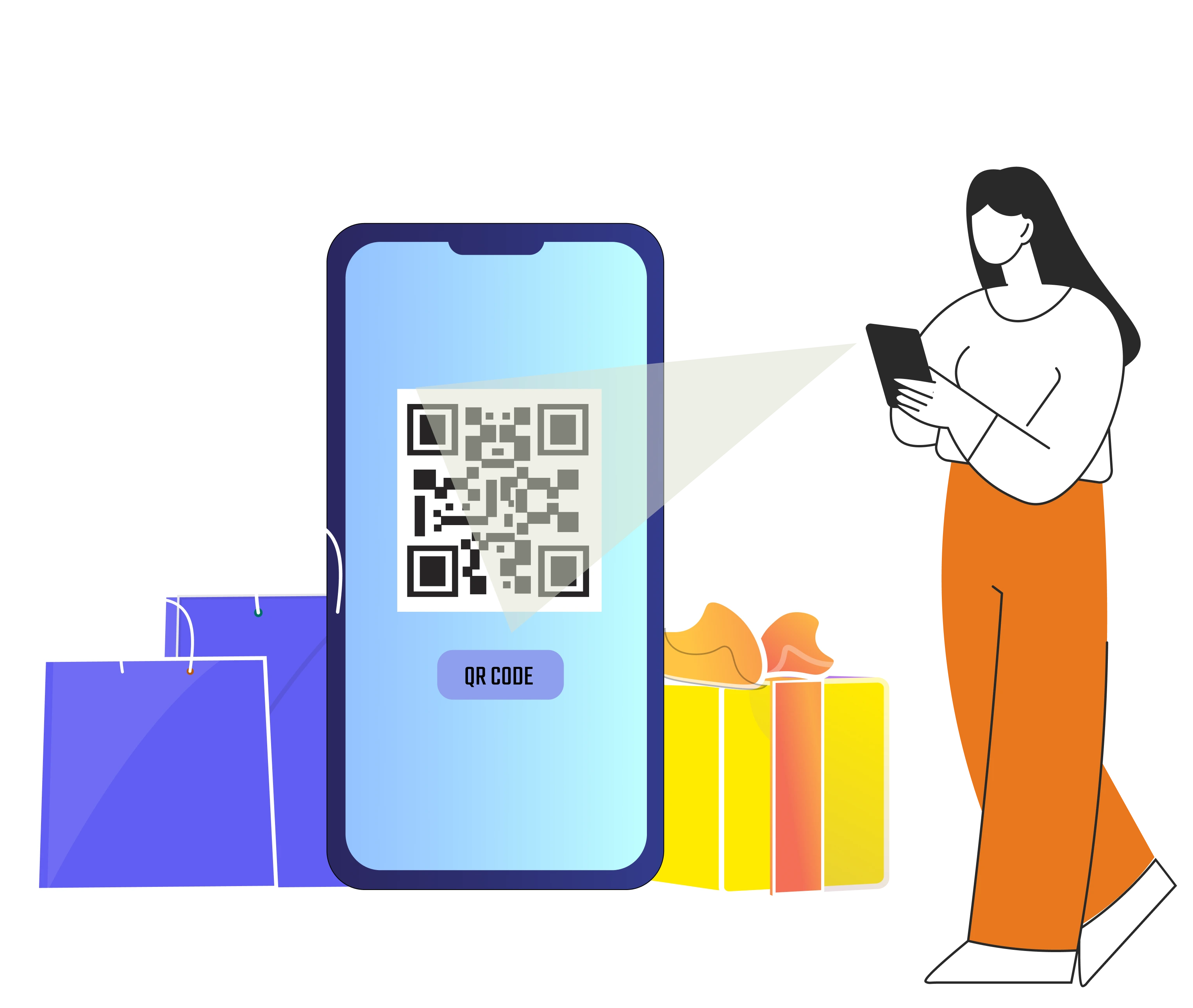
A painter in Kochi scans a QR code on a paint can lid. Within seconds, points appear in his WhatsApp loyalty wallet bringing him closer to the premium power drill he has been earning toward for the past two months. He didn't need to fill out a form, call a helpline, or remember a registration number. He scanned. He earned. He moved on.
That interaction frictionless, instant, mobile-native is the future of channel loyalty in FMCG and building materials. And in 2026, it is rapidly becoming the present for manufacturers who understand what QR code loyalty programs can do that no other mechanic can.
This playbook covers everything: why QR codes are uniquely suited to FMCG and building materials channels, the six types of QR loyalty programs and when to use each, the seven-layer fraud prevention stack that keeps programs honest, sector-by-sector implementation guides for building materials, paints, FMCG, and agri-inputs, and the technology infrastructure that makes it all work at scale.
1. Why QR Codes Are the Ideal Loyalty Mechanic for FMCG & Building Materials
Channel loyalty in FMCG and building materials faces a fundamental challenge that does not exist in simpler B2B relationships: the manufacturer rarely has a direct relationship with the end user of the product. Products travel through distributors, retailers, contractors, painters, plumbers, electricians, and masons before they reach the wall, pipe, or field they were made for.
Traditional loyalty mechanics points for purchase orders, volume rebates, tier structures work well at the distributor and dealer level, but they stop there. They cannot reach the contractor who specifies your brand on a construction site. They cannot reward the painter who recommends your product to a homeowner. They cannot verify that the product delivered was actually installed, not returned or diverted.
QR codes on product packaging solve all of this simultaneously. They create a direct digital touchpoint between the manufacturer and the end user of the product, the person who actually opens the bag, applies the paint, or installs the fitting regardless of how many distribution layers sit in between.
The Five Things QR Code Loyalty Programs Do That Nothing Else Can
- Direct influencer engagement: Reward contractors, painters, applicators, and installers directly the people who specify and apply your product bypassing the distribution layer without disrupting it.
- Genuine usage verification: A QR scan at the point of use provides proof that a product was actually opened and used, not purchased in bulk and returned or diverted to a parallel market.
- Real-time geographic intelligence: Every scan generates a location data point. Over time, this builds an accurate picture of where your products are actually being used by geography, by project type, by contractor profile.
- Anti-counterfeiting at scale: Serialised QR codes that can only be scanned once and validate against a live database provide a cost-effective counterfeit detection layer that benefits both the manufacturer and the authentic channel.
- Business continuity independence: Unlike programs that depend on distributor data submission or sales rep enrollment, QR programs give manufacturers a direct data channel that functions regardless of distributor cooperation or engagement.
2. The Six Types of QR Code Loyalty Programs
Not all QR code loyalty programs are built the same way. The right program type depends on your product category, distribution structure, target participant (dealer vs. contractor vs. end consumer), and business objectives. Here is a clear taxonomy of the six major program types.
Pack/Unit Scan Programs
QR on each product unit bag, can, box. Participant scans on opening. Most common in paints, building materials, FMCG.
Invoice QR Programs
QR codes on invoices or delivery notes. Retailer or dealer scans to confirm receipt and trigger loyalty points.
Project Registration Programs
Contractor registers a project and scans all product QRs linked to that project. Earns project-completion bonuses.
Training QR Programs
QR codes in training materials, product manuals, or event collateral. Scanning unlocks training modules or confirms attendance.
Hidden/Under-Label QRs
QR code placed under a peel-off label or inside a sealed packaging only accessible after genuine purchase and opening.
Batch/Lot QR Programs
One QR code per production batch or pallet. Distributor or dealer scans on receipt. Provides supply-chain traceability.
Most high-performing programs combine multiple QR types: unit scan QRs for contractor/end-user engagement, invoice QRs for dealer-level verification, and project registration for construction sector programs where project-level tracking unlocks higher-value rewards.
3. Sector-by-Sector Implementation Guide
QR code loyalty program design is not universal the optimal mechanics vary significantly by sector, product type, and the profile of the participant you are trying to engage. Here is a detailed implementation guide for the four major sectors.
FMCG & Consumer Goods
FMCG QR programs primarily target retailers and kirana store owners who stock and push your brand. The objective is to reward genuine stocking, display compliance, and sell-through performance behaviors that are otherwise invisible to the manufacturer.
- QR on inner carton or retail unit retailer scans when stocking shelves
- Display compliance QR photo submission + QR scan confirms planogram execution
- Reorder trigger: scan at low stock levels to auto-generate reorder suggestion
- Earn rates calibrated to margin per SKU higher-margin products earn faster
Building Materials & Cement
Cement, tile, waterproofing, and structural materials programs primarily target contractors and masons the people who specify and apply products on site. GPS verification at construction sites adds a powerful fraud prevention layer.
- Durable QR printing required specialty inks resistant to dust, moisture, rough handling
- GPS verification at construction sites scan location should match project registration
- Project-level grouping: all scans from one project earn toward a project completion bonus
- Batch QR at distribution level + unit QR at contractor level for dual-layer tracking
Paints & Coatings
Painter loyalty programs are among the most sophisticated QR implementations in Indian manufacturing. Painters are specification influencers, their brand recommendation to homeowners is the single most powerful driver of brand selection in decorative paints.
- QR inside paint can closure or under label only accessible after opening
- Training QRs on product sheets painters earn points for completing application training
- Painter verification: photo submission of completed work for bonus earn events
- Product-type multipliers: premium products (exterior emulsion, waterproofing) earn at higher rates
Agri-Inputs & Rural Distribution
For seed, fertilizer, and crop protection manufacturers, QR codes verify genuine product use by farmers and rural distributors while simultaneously authenticating products in markets where counterfeiting is a significant problem.
- Offline scan capability is essential rural India connectivity limitations are real
- Regional language support is non-negotiable: Hindi, Marathi, Telugu, Tamil, Punjabi
- Village-level extension workers as program ambassadors for rural activation
- Seasonal earn calendars aligned to sowing and harvest cycles
Pharma and Healthcare: A Special Case
QR code programs in pharma reward stockists for genuine product stocking, verify cold-chain compliance through temperature-validated scan events, and authenticate medicines to combat counterfeiting in markets where this is a patient safety issue. Regulatory constraints on pharmaceutical promotions require specialist legal review before program design but the underlying QR infrastructure is the same.
4. The 7-Layer QR Fraud Prevention Stack
QR code loyalty programs are only as good as their fraud prevention. Without a robust anti-abuse architecture, programs are quickly exploited: codes are photographed and shared, bulk scanned by warehouse staff before distribution, or systematically harvested by bad actors in the supply chain. Here is the complete seven-layer fraud prevention framework used by high-integrity programs.
Unique Serialised Codes One-Time Scan Only
Every QR code in the program is unique, cryptographically signed, and registered in the platform database. Once scanned successfully, the code is permanently deactivated. Duplicate scan attempts are flagged in real time and trigger an alert. This is the foundational layer without it, no other fraud control is effective.
Scan Velocity Limits Per Account
Each participant account has a daily, weekly, and monthly scan limit calibrated to their realistic purchasing volume. A painter who typically applies 5–10 cans per day cannot scan 200 codes in a single session without triggering a review flag. Velocity limits are set per tier and per participant profile, not as a blanket cap.F
Geographic Plausibility Validation
Scan location (GPS) is captured and validated against the participant's registered location and project addresses. A code scanned in Surat that belongs to a production batch shipped to Kolkata generates a geographic anomaly alert. This layer catches wholesale diversion and inter-market leakage.
Device Fingerprinting and Multi-Account Detection
Each device that scans a code generates a fingerprint. Multiple accounts registering from the same device are flagged as potential duplicate account fraud. A single device cannot register more than a defined number of accounts without triggering a review. This prevents the "account farming" attack where one person creates dozens of fake accounts to multiply scan earnings.
Delayed Points Release Window
Points earned from QR scans are held in a pending state for 24–72 hours before becoming redeemable. This window allows the platform to run anomaly detection, cross-reference with ERP purchase records, and catch suspicious patterns before value is disbursed. It also provides a buffer to reverse points on product returns.
ERP Cross-Reference Validation
Scan events are cross-referenced against ERP production and dispatch records. A code from production batch #12345 that was dispatched to Distributor A in Chennai cannot be scanned by a participant in Mumbai whose distributor is B. ERP integration makes every scan validatable against the manufacturer's own supply chain records.
AI-Powered Anomaly Detection
Machine learning models trained on historical scan patterns identify behavioral anomalies: sudden spikes in scan volume from a new account, unusual timing patterns (all scans between 2–4 AM), statistical clustering of scans from a single location across dozens of accounts. AI anomaly detection catches fraud patterns that rules-based systems miss particularly sophisticated attacks that stay within individual velocity limits while exhibiting collectively unusual behavior.
Well-implemented 7-layer programs report fraudulent scan rates below 0.8% of total scan volume. Programs with only 1–2 layers in place typically see 8–15% fraudulent scan rates a significant drain on rewards budget and a signal to legitimate participants that the program is being gamed.
5. QR Code Design & Packaging Integration
The physical design of the QR code and its integration into product packaging is not a trivial consideration. Poor packaging integration is one of the most common reasons QR loyalty programs underperform either because participants cannot find the code, the code is inaccessible before purchase, or the code fails to scan in field conditions.
Placement Principles by Product Type
| Product Type | Recommended Placement | Anti-fraud Rationale | Special Considerations |
|---|---|---|---|
| Paint cans | Inside lid / under closure seal | Only accessible after genuine purchase and opening | Must withstand solvent exposure; use UV-resistant ink |
| Cement bags | On bag body, under a peel-off label | Label removal required deters pre-purchase scanning | Specialty ink required for dust and moisture resistance |
| FMCG packs | On inner carton liner or inside flap | Accessible on opening; deters shelf scanning | Small format QR minimum 2×2 cm for reliable scan |
| Tile/sanitary boxes | On outer carton, under shrink wrap | Wrap removal required before scanning | QR must survive warehouse stacking and handling |
| Agri-input bags | Inside the bag top visible on opening | Confirms genuine product use at field level | Waterproof or laminated label essential; offline scan needed |
| Pharma packaging | Under blister foil or inside carton | Foil removal confirms genuine dispensing | Regulatory compliance review required before placement |
QR Printing Cost Reality
One of the most common objections to QR loyalty programs is printing cost. The reality is more reassuring than most manufacturers expect:
- Offset / flexographic printing (standard for FMCG and building materials packaging): unique QR codes are generated digitally and printed in a standard print run without additional passes. Incremental cost per code: ₹0.05–₹0.20 depending on packaging type and print run volume.
- Serialised packaging (unique code per unit, required for pharmaceutical and premium programs): digital printing or inkjet overprinting. Cost: ₹0.50–₹2.00 per unit depending on application method and volume.
At both cost levels, the commercial justification is almost always straightforward a single prevented counterfeit event, one recovered diversion case, or one percentage point of wallet share gained from a contractor participant will typically exceed the total printing cost for an entire production run.
6. The Technology Infrastructure: What You Actually Need
A QR code loyalty program is only as capable as the technology platform behind it. The scan is the visible tip of an iceberg that includes code generation, supply chain integration, real-time validation, fraud detection, points management, communication delivery, and analytics. Here is what a production-ready platform must provide.
Critical Technical Requirements
Offline Scan Capability
This is non-negotiable for any program targeting contractors, painters, or rural distributors in India. Construction sites, rural fields, and warehouse environments frequently have poor or no mobile data connectivity. A QR scan that requires an active internet connection at the moment of scan will fail in these environments, creating a frustrating experience that drives disengagement. The platform must support offline scan with automatic sync when connectivity is restored.
Sub-Second Real-Time Validation
The scan-to-confirmation experience must be near-instant validation, fraud check, points credit, and confirmation message all completed in under 2 seconds. Any perceptible delay between scan and reward confirmation degrades the dopamine response that makes the program habit-forming. This requires server-side validation architecture optimised for low-latency response, not batch processing.
WhatsApp-Native Points Delivery
In the Indian market, the gold standard for scan confirmation is a WhatsApp message arriving within seconds of a scan: "You earned 50 points! Your total is 1,240 points ₹3,200 more in rewards until you reach Gold tier." This instant, channel-native confirmation creates the immediate gratification that drives consistent program participation. Programs that deliver confirmation via SMS or app notification see consistently lower engagement than WhatsApp-native programs.
ERP-Level Code Registration
QR code generation should be triggered automatically from ERP production batch records ensuring every product unit or invoice that enters the distribution chain carries a valid, system-registered code. Manual code generation and upload processes break down at scale and create supply chain synchronisation gaps that undermine fraud prevention. Loylt.works provides pre-built connectors for Tally, SAP, Oracle, and a full REST API for custom ERP integrations.
7. The 6-Step Implementation Framework
Define Participant Segments and Earn Objectives
Before any code is printed, define who you are rewarding (distributor, dealer, contractor, end consumer, or multiple segments), what behaviors you want to incentivise (product usage, training, project registration, geographic expansion), and what commercial outcomes you are targeting (wallet share, geographic coverage, counterfeiting reduction). Each segment may need a distinct QR program layer.
Design Your QR Code Architecture and Fraud Stack
Select the QR type(s) appropriate for your product and participants. Design placement specifications for each packaging variant. Configure the fraud prevention layers appropriate to your risk profile. Establish earn rates per code type and per product category. Define the geographic validation rules for your distribution territory.
Integrate With Your ERP and Supply Chain Systems
Connect code generation to your production batch management system so codes are created and registered automatically as products are manufactured. Establish the supply chain validation rules: which codes belong to which distribution territories, which distributor accounts, and which eligible product categories. This integration is the backbone of your fraud prevention architecture.
Run a Controlled Pilot in One Geography
Launch the program in a single region with 50–200 participants across your target segments before national rollout. The pilot tests packaging integration, scan success rates in field conditions, fraud prevention effectiveness, and participant activation rates. Critical learning: what percentage of products with QR codes are actually scanned? If it is below 25%, the program has an activation problem that must be solved before national scale.
Build Participant Activation Into Your Distribution Process
QR codes on packaging are necessary but not sufficient for high scan rates. Participants need to know the program exists, understand how to scan, and have a reason to do so immediately. Build activation into your distribution process: field sales team briefings, dealer activation kits, WhatsApp broadcast to your existing dealer network, and QR usage instructions printed on every product package in regional languages.
Monitor Scan Rate, Fraud Rate, and Participant LTV Continuously
The three metrics that define QR program health: Scan Rate (percentage of codes that are actually scanned target: 35%+ for contractor programs, 15%+ for distributor programs), Fraud Rate (percentage of scans flagged as suspicious target: below 1%), and Participant LTV (average cumulative earn per registered participant should increase month-over-month as participants become more habitual). Review these monthly and adjust fraud parameters and earn rates as patterns emerge.
8. India-Specific Considerations for 2026
The GST E-Invoicing Integration Opportunity
India's GST e-invoicing mandate now covering businesses with turnover above ₹5 crore creates a unique opportunity for QR loyalty programs. Every GST e-invoice carries an IRN (Invoice Reference Number) and a QR code generated by the government's IRP system. Loyalty platforms that can read and validate these government-generated QR codes alongside product-level QR codes provide a dual verification layer: dealer purchase verified at the invoice level, contractor usage verified at the product level. This is a uniquely Indian technical advantage that no global loyalty platform provides natively.
UPI-Integrated Reward Disbursement
The expectation for reward delivery in India in 2026 is instant UPI transfer or instant e-voucher not a check mailed to the dealership or a bank transfer that takes 3–5 business days. Participants who scan a code and receive their reward via UPI within 24 hours stay engaged at dramatically higher rates than those whose rewards arrive through legacy channels. QR loyalty platforms must have native UPI disbursement capability, not a bolt-on integration.
Regional Language Scan Confirmations
A QR scan confirmation message in English is largely useless to a mason in Bihar or a painter in rural Andhra Pradesh. Scan confirmation, points balance updates, tier notifications, and challenge communications must be delivered in the participant's preferred language. This requires not just translation but localisation tone, register, and idiom appropriate to each linguistic market. Programs with regional language support see 40–60% higher engagement in non-metro markets compared to English-only programs.
DPDPA Compliance for Scan Data
India's Digital Personal Data Protection Act (DPDPA) 2023 creates obligations around the collection, storage, and use of personal data generated by QR scans including location data, device identifiers, and participant behavioral data. Programs must obtain clear, informed consent at registration, maintain a data processing record, and provide participants with rights to access and delete their data. Programs launched without DPDPA compliance in 2026 face significant regulatory exposure as enforcement increases.
9. ROI Framework: How to Measure QR Loyalty Program Success
The Four ROI Dimensions of QR Loyalty Programs
Dimension 1: Direct Revenue Uplift
The most measurable outcome: do enrolled participants buy more of your brand than matched non-enrolled participants? Track wallet share at the contractor or dealer level for the enrolled cohort versus the control group at 6, 12, and 18 months. Target: 15–25 percentage point wallet share advantage for enrolled participants within 12 months.
Dimension 2: Anti-Counterfeiting Value
Quantify counterfeit detection events each confirmed counterfeit detection via duplicate scan alert represents a unit of genuine product sales recovered from the parallel market. In categories with significant counterfeiting (paints, agri-inputs, pharma), this dimension alone often justifies the program investment.
Dimension 3: Market Intelligence Value
Assign a value to the geographic and behavioral data generated by the program. Where are your products actually being used? Which product types are gaining contractor preference? Which geographies are underperforming? This intelligence drives better resource allocation in sales, marketing, and distribution value that compounds over time.
Dimension 4: Specification Influence Value
For categories where contractors, painters, or applicators influence product selection (paints, building materials, plumbing), quantify the specification influence of enrolled participants. A painter enrolled in your loyalty program who recommends your brand to 15 homeowners per year is generating substantial downstream revenue that is not captured in their direct purchase data alone.
10. Future Trends: QR Loyalty Through 2030
Dynamic QR Codes With Personalised Experiences
Static QR codes that trigger the same response for every participant are giving way to dynamic codes that recognise the scanning participant and deliver a personalised experience. The content that appears when a Gold-tier contractor scans a product QR is different from what a Bronze-tier retailer sees tailored earn rates, personalised product information, and customised reward suggestions based on individual loyalty history.
Augmented Reality Integration
QR codes are becoming entry points to augmented reality product experiences. A contractor scans a waterproofing product QR and sees an AR application technique overlay. A painter scans a paint QR and sees an AR visualisation of the colour on a wall sample before they open the can. These immersive experiences build product knowledge while making the loyalty interaction itself memorable and shareable.
AI-Powered Personalised Reward Recommendation
As scan data accumulates, AI models trained on individual participant scan histories can predict what reward will maximise each person's next-scan motivation surfacing the specific item from the reward catalog most likely to drive the next purchase decision for that individual.
IoT and Smart Packaging Integration
NFC tags embedded in packaging scannable without opening a camera app and IoT-enabled packaging that tracks temperature, humidity, and handling conditions are beginning to complement QR codes in premium and pharmaceutical programs. By 2028, multi-modal smart packaging programs combining QR, NFC, and sensor data will be standard in high-value product categories.
Conclusion
QR code loyalty programs represent a structural shift in how manufacturers in FMCG, building materials, paints, and agri-inputs can build relationships with the people who actually use their products. For the first time, a manufacturer can have a direct, data-rich, real-time relationship with the painter, the contractor, the mason, and the rural distributor regardless of how many distribution layers sit between the factory and the field.
The technology to do this well serialised codes, offline scan, WhatsApp delivery, ERP integration, AI fraud detection exists today. The question for manufacturers in 2026 is not whether to build a QR loyalty program, but whether to build one well or settle for a superficial implementation that delivers little more than marginal brand awareness. This playbook gives you the framework to build one well.
✅ QR Loyalty Program Launch Checklist
- Participant segments defined: contractor, dealer, distributor, end consumer with distinct QR layers for each
- QR placement specifications finalised for each packaging variant
- Serialised unique codes with one-time scan validation configured
- All 7 fraud prevention layers enabled and tested
- ERP integration complete: code generation triggered from production batch records
- Offline scan capability enabled and tested in field conditions
- WhatsApp delivery configured for scan confirmation and points updates
- Regional language support enabled for target geographies
- GST-compliant reward management configured with automated documentation
- DPDPA consent collection and data rights management implemented
- Pilot launched in one geography minimum 60 days before national rollout
- Scan rate, fraud rate, and participant LTV dashboards live

20+ years in implementing enterprise business solutions globally for different industry verticals, from business analysis to business improvement an experienced entrepreneur with a record of success, an eye for market needs, and an ability to bring teams together, from technical developers to sales.