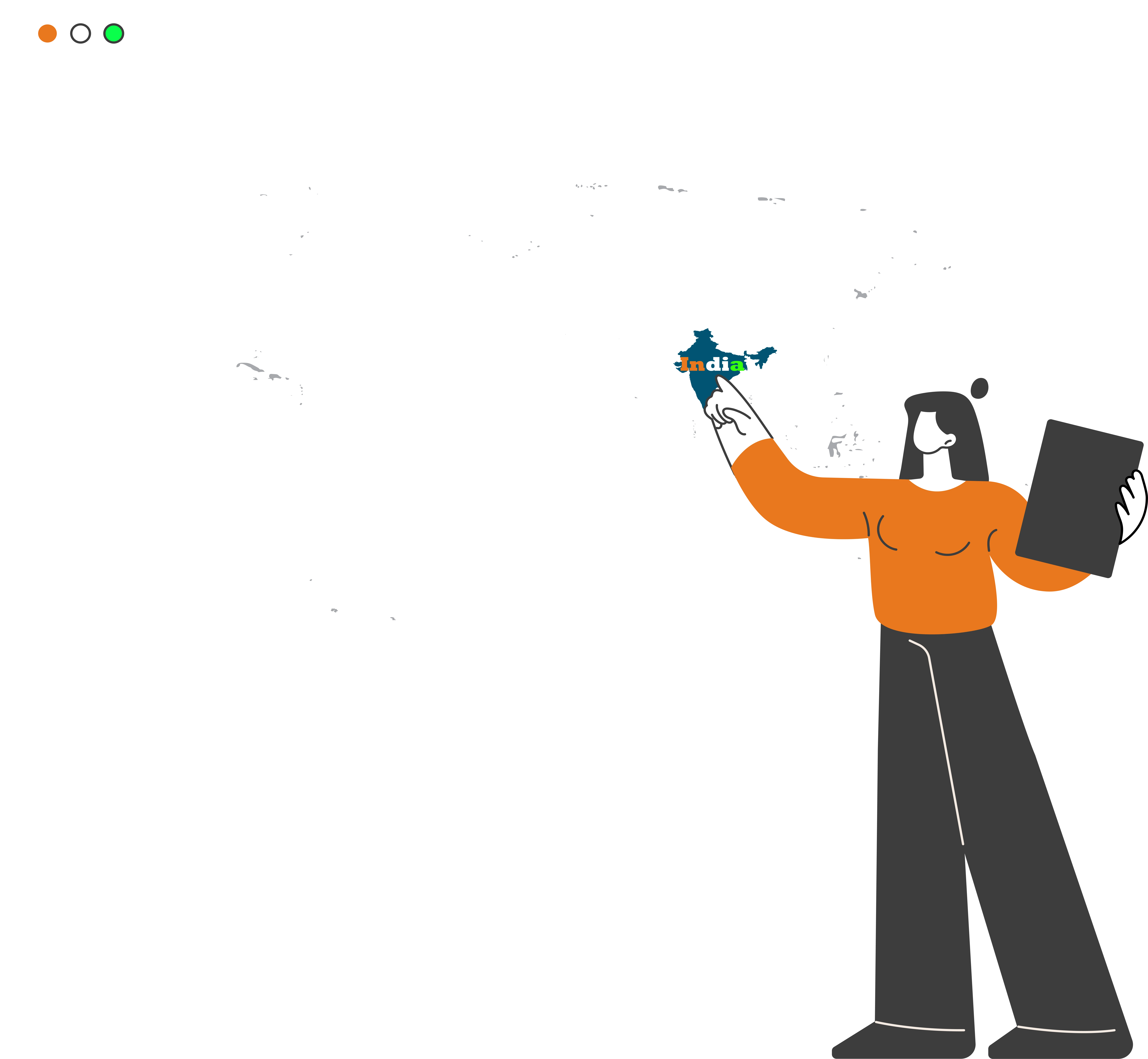
India's loyalty market is undergoing the most significant structural transformation in its history. The convergence of five forces a rapidly maturing smartphone-and-data infrastructure, an advanced digital payments ecosystem, a regulatory framework catching up with digital commerce, a manufacturing sector hungry for channel intelligence, and the arrival of genuinely capable AI is reshaping what loyalty programs are, what they can do, and what participants expect from them.
The companies that understand this transformation and build for it will find loyalty programs becoming one of their most powerful commercial assets. Those that don't will find their programs becoming increasingly irrelevant against the growing expectations of Indian consumers, dealers, and channel partners.
This report identifies the ten most significant trends shaping India's loyalty landscape in 2026 with specific implications for brand managers across B2C, B2B, and channel loyalty contexts.
1. AI-Powered Hyper-Personalisation at Individual Scale
For most of loyalty's history, "personalisation" meant segment-level customisation different messaging for Bronze vs. Gold tier participants, or tailored communications for high-value vs. low-value customers. In 2026, genuine individual-level personalisation is becoming operationally achievable for the first time and the performance gap between personalised and generic programs is accelerating.
AI models trained on individual participant behavior scan history, purchase patterns, redemption preferences, challenge completion rates, communication response timing can now generate unique challenge offers, reward recommendations, and communication content for each individual participant at scale. A painter who consistently buys premium exterior products and responds to weekend WhatsApp messages at 8 AM gets a different challenge from a painter who buys entry-level interior products and responds to Tuesday afternoon messages.
What Changes When Personalisation Is Genuinely Individual
- Challenge relevance increases dramatically: Challenges calibrated to an individual's actual purchasing pattern and achievement history are 3-4x more likely to be completed than generic challenges
- Reward motivation becomes predictable: AI can predict which reward from the catalog will maximise the next-scan motivation for a specific individual, improving redemption-driven Engagement
- Churn prediction becomes genuinely actionable: individual behavioral signals (scan frequency decline, challenge completion drop-off, communication disengagement) provide 60-90 day early warning for at-risk participants
- Communication timing optimisation: AI learns the specific day and time each participant is most responsive to program communications, dramatically improving open and action rates
Evaluate your loyalty platform's AI capability not just as a feature checklist but as a demonstrated performance differentiator. Ask vendors: "Show me the actual performance difference between your AI-personalised cohort and your non-personalised cohort in a running program." If they can't show you that data, the AI capability is marketing, not reality.
2.WhatsApp Becomes the Default Loyalty Interface
The shift from portal-based to WhatsApp-native loyalty program interaction is no longer a trend it is a transition that is functionally complete in most B2B channel loyalty categories. In 2026, a program that requires participants to log into a separate web portal or download a dedicated app is operating at a structural engagement disadvantage in the Indian market.
The reason is straightforward: Indian dealers, contractors, painters, and rural distributors check WhatsApp constantly. They check a loyalty portal almost never. Any loyalty interaction that requires the participant to leave their primary communication channel and navigate to a separate system introduces friction that compounds over time into disengagement.
The Complete WhatsApp Loyalty Stack in 2026
The benchmark for a WhatsApp-native loyalty program in 2026 is a participant who can do everything through WhatsApp without ever visiting a separate portal:
- Check points balance and tier status via simple WhatsApp message
- View active challenges and their deadlines
- Receive personalised challenge recommendations
- Get instant QR scan confirmation with points credited
- Browse and select from the rewards catalog
- Initiate and complete a redemption (UPI transfer or e-voucher delivery)
- Get support for queries via WhatsApp conversation
- Receive tier upgrade / downgrade notifications
Conversational AI in WhatsApp Loyalty
The next frontier beyond menu-driven WhatsApp interactions is fully conversational AI participants sending natural language messages ("what's the best challenge for me this month?" or "how many points do I need for the Gold tier?") and receiving genuinely helpful, personalised responses. This removes the last residual friction from WhatsApp loyalty interaction and makes program engagement indistinguishable from a natural conversation.
If your program's primary participant interface is a web portal with WhatsApp notifications bolted on, you have a structural engagement problem. The investment priority is not better portal design it is making WhatsApp the primary interface and the portal the secondary documentation layer.
3. DPDPA Compliance Becomes a Loyalty Program Non-Negotiable
India's Digital Personal Data Protection Act (DPDPA) 2023, with its implementing rules now in effect through 2025–2026, is creating significant compliance obligations for loyalty program operators that most brands are not yet adequately prepared for. The risk is not theoretical enforcement action, regulatory penalties, and participant trust erosion are live concerns for programs that have not addressed DPDPA compliance in their loyalty architecture.
The Four DPDPA Obligations That Directly Affect Loyalty Programs
1. Consent Explicit, Informed, and Granular
DPDPA requires explicit, informed consent for each category of personal data processed. A generic "I agree to the terms" tick-box is not sufficient. Loyalty programs must obtain separate consent for: purchase transaction data collection, location data from QR scans, behavioral analytics, communication tracking, and data sharing with third-party reward fulfillment partners. Consent records must be stored and producible on demand.
2. Data Minimisation
Programs can only collect personal data that is necessary for the stated purpose. This creates pressure to audit loyalty program data collection against purpose historical practices of "collect everything, figure out the use later" are non-compliant. Location data from QR scans, device fingerprinting for fraud prevention, and behavioral data for personalisation all require specific purpose justification.
3. Data Principal Rights
Participants have the right to access their data, correct inaccuracies, and request deletion. Loyalty platforms must provide a technically functional mechanism for these rights not just a policy statement. Data deletion requests create particular complexity when participant data is embedded in fraud prevention models or aggregated analytics.
4. Significant Data Fiduciary Status
Large-scale loyalty programs processing data for millions of participants may qualify as Significant Data Fiduciaries under DPDPA attracting additional obligations including a Data Protection Impact Assessment and appointment of a Data Protection Officer. Programs crossing scale thresholds should obtain legal advice on their status.
Commission a DPDPA compliance audit of your loyalty program immediately if you have not already done so. Assess consent mechanisms, data collection practices, retention policies, and data rights workflows. Non-compliance is a legal and reputational risk that is growing as enforcement activity increases through 2026.
4. B2B Loyalty Overtakes B2C as the Fastest-Growing Segment
For most of loyalty's history in India, the dominant category was consumer loyalty airline miles, retail points, credit card rewards. B2B channel loyalty programs existed but were peripheral manual, under-invested, and rarely treated as strategic assets. That balance has decisively shifted.
In 2026, B2B channel loyalty is growing at nearly twice the rate of consumer loyalty in India (28% vs. 14% YoY). The drivers are clear: India's manufacturing sector is expanding rapidly, the complexity of multi-tier distribution demands technology driven channel management, and manufacturers have discovered that the ROI on well-designed dealer and contractor loyalty programs dramatically exceeds the ROI on consumer advertising for many product categories.
Why B2B Loyalty Is Outperforming B2C
Higher per-participant ROI
A single engaged dealer generates 50-200x more revenue than a single engaged consumer the math on loyalty investment is dramatically more favorable in B2B
Scan Velocity Limits Per Account
Each participant account has a daily, weekly, and monthly scan limit calibrated to their realistic purchasing volume. A painter who typically applies 5–10 cans per day cannot scan 200 codes in a single session without triggering a review flag. Velocity limits are set per tier and per participant profile, not as a blanket cap.F
Less competition for attention
Dealers and contractors receive far fewer loyalty program overtures than consumers, making program differentiation easier and engagement deeper when programs are well-designed
Behavioral change potential
A dealer who shifts 15 percentage points of wallet share to your brand represents a massive revenue gain; a consumer who increases purchase frequency by 10% represents a much smaller one
Channel data value
B2B programs generate actionable intelligence about distribution performance, geographic penetration, and product mix that has direct commercial decision value creating a second ROI stream beyond direct revenue uplift
If your loyalty investment is concentrated in consumer-facing programs and you operate through a distribution channel, evaluate whether rebalancing toward B2B channel loyalty would generate higher aggregate ROI. The answer in most manufacturing categories is yes and the operational infrastructure to run sophisticated B2B programs now exists in India at price points accessible to mid-market manufacturers.
5. Tier 2 & Tier 3 Markets Become the New Loyalty Frontier
For most of India's loyalty program history, programs were designed for metropolitan audiences high-income consumers in India's top 8 cities, and large-format retailers and distributors in major commercial hubs. Tier 2 and Tier 3 markets were an afterthought: harder to reach, lower average transaction values, and requiring local language capability that most programs lacked.
In 2026, this is inverting. Metro loyalty markets are maturing and competitive. Tier 2 and Tier 3 markets cities like Indore, Coimbatore, Visakhapatnam, Rajkot, Kochi, Agra, and hundreds more represent the primary growth opportunity for India's next decade of loyalty expansion. The infrastructure conditions that previously made these markets inaccessible have changed dramatically.
What Changed: The Infrastructure Conditions for Tier 2/3 Loyalty
- WhatsApp penetration: Deep WhatsApp penetration in semi-urban and rural India means program delivery no longer requires the internet literacy or app download behavior that excluded these markets
- UPI ubiquity: UPI-based reward delivery reaches a Tier 3 kirana store owner as easily as a Mumbai retail chain digital reward disbursement no longer requires banking infrastructure depth
- 4G coverage: Near-universal 4G coverage (with 5G expanding rapidly) means connectivity constraints are no longer a barrier for most Tier 2/3 geographies
- Regional language AI: Large language models with Indian language capability are making regional language content creation, communication personalisation, and conversational loyalty interfaces cost-effective for the first time
The Opportunity Size
India's Tier 2 and Tier 3 cities collectively account for 53% of India's GDP and over 60% of India's manufacturing consumption. For FMCG, building materials, agri-inputs, and industrial goods manufacturers, the channel in these markets often smaller dealers and distributors operating informally has historically been the hardest to reach and the most prone to competitive switching. Loyalty programs designed for these markets represent a structural competitive advantage that is difficult and time-consuming for competitors to replicate.
Audit what percentage of your loyalty program's active participants are in Tier 2/3 markets versus your actual revenue distribution. If the ratio is significantly skewed toward metros, your program is leaving its highest-growth opportunity unaddressed. Tier 2/3 program design requires specific attention to regional language support, offline capability, regional reward catalog relevance, and field activation strategy through local channel partners.
6. UPI-Native Reward Delivery Becomes the Baseline Expectation
India's UPI infrastructure processing over 17 billion transactions per month in early 2026 has permanently reset participant expectations for reward delivery speed and convenience. The check mailed to the dealership, the bank transfer with 5-day processing, the physical gift voucher dispatched by courier these have become program-quality signals. Participants who experience these delays mentally categorise the program as "old fashioned" and adjust their engagement accordingly.
In 2026, the baseline expectation for reward delivery in India is: instant, mobile-native, and UPI-based. A loyalty program that cannot disburse rewards via UPI transfer or instant e-voucher within minutes of a redemption request is operating below participant expectations in most categories.
UPI Reward Delivery: What Best-in-Class Looks Like
- Redemption initiated via WhatsApp message or tap in loyalty app
- Confirmation and UPI transfer initiated within 60 seconds
- UPI credit arrives in participant's account within 2–5 minutes
- WhatsApp confirmation message with transaction reference
- Points balance updated in real time
- GST-compliant reward documentation generated automatically
Measure the average time between a participant's redemption request and their receipt of the reward. If it exceeds 24 hours for digital rewards, you have a participant experience problem that is actively suppressing redemption rates and program engagement. UPI-native disbursement is no longer a premium feature it is table stakes.
7. Loyalty Programs Embed Into Daily Business Workflows
The loyalty programs of the future will not be separate portals that participants visit occasionally. They will be invisible layers embedded in the daily business tools that participants already use making loyalty frictionless by making it invisible.
The direction is clear: a distributor placing an order in their business management app sees their points balance update in real time. A salesperson closing a deal in their CRM receives a loyalty credit automatically. A contractor submitting a project completion report in their site management tool earns project-completion bonus points without any additional action.
Where Loyalty Embedding Is Happening in India
- ERP-embedded loyalty: Points earned automatically from Tally, SAP, or Oracle transaction records no separate scan or submission required from the dealer
- Ordering platform integration: Loyalty points displayed and updated within the distributor's ordering portal, making program salience part of every purchase decision
- Field sales app integration: Field sales representatives see dealer loyalty status, tier proximity, and active challenges within their CRM, making loyalty a natural part of every dealer conversation
- Contractor project management tools: Loyalty earn events triggered by project registration, milestone completion, and product verification within construction project management workflows
Map the daily digital workflows of your primary loyalty participants. Which tools do they use every day? Which of those tools could be integration points for your loyalty program making loyalty earn and awareness a natural part of existing behavior rather than an additional behavior you are asking for?
8. ESG and Sustainability Incentives Enter Loyalty Design
Sustainability is entering Indian loyalty program design through two channels simultaneously: regulatory pressure on manufacturers to document and improve their supply chain ESG performance, and growing end-customer and institutional buyer demand for sustainability credentials from the brands they buy.
In 2026, the leading edge of Indian loyalty program design is incorporating ESG behaviors as earn triggers alongside commercial ones: rewarding dealers for responsible packaging disposal, incentivising contractors for verified use of eco-certified products, or providing loyalty credits for distributors who achieve energy efficiency milestones in their warehousing operations.
ESG Loyalty Earn Triggers Taking Shape in India
- Responsible packaging return: Bonus points for dealers who return empty packaging or containers for recycling (particularly relevant for paint, agri-input, and chemical categories)
- Green product adoption: Multiplier earn rates for eco-certified, low-VOC, or sustainably sourced product variants using loyalty to accelerate portfolio shift toward green SKUs
- Digital invoice adoption: Points for dealers who transition from paper to e-invoicing, supporting both GST compliance and paper reduction goals
- Training for sustainable practice: Loyalty credits for contractors completing training on sustainable installation or application techniques
Review your sustainability commitments and ESG reporting obligations. Are there specific sustainable behaviors in your channel product category shifts, packaging return, digital adoption that loyalty incentives could accelerate? Integrating ESG earn triggers creates a documented record of sustainable practice adoption that strengthens your ESG reporting while driving commercial outcomes.
9. Unified Loyalty Ecosystems Replace Siloed Program Stacks
A pattern that afflicts many larger Indian manufacturers is the siloed loyalty stack: a consumer loyalty program managed by the marketing team, a dealer incentive program managed by the sales team, a contractor program managed by the trade marketing team, and perhaps a distributor rebate program managed by the finance team. Each runs on a different platform, has a different data model, and creates a fragmented brand experience across the commercial value chain.
In 2026, the strategic direction is decisively toward unified loyalty ecosystems a single platform managing incentives and engagement across the entire commercial chain, from primary distributors to secondary distributors, dealers, retailers, contractors, and end consumers. The unified data model this creates enables optimised incentive investment across the full channel stack and provides a coherent brand experience at every commercial touchpoint.
What Unification Enables That Silos Cannot
- Full-channel attribution: Understanding how loyalty investment at the contractor level drives sell-through at the dealer level and revenue at the distributor level the complete commercial chain made visible
- Cross-tier incentive optimisation: Shifting loyalty budget toward the tier and segment showing the highest marginal ROI, rather than managing each program as a fixed-cost center
- Consistent brand experience: A contractor who participates in both the product-level QR program and the training certification program experiences a coherent, reinforcing brand relationship rather than two unrelated programs
- Reduced technology cost: One platform, one integration, one analytics layer significantly lower total cost than managing multiple vendor relationships
Audit how many separate loyalty or incentive programs your company currently operates across different commercial tiers. If the answer is three or more, assess the total cost (including management time, integration complexity, and data fragmentation) against the cost of migration to a unified platform. In most cases, the case for unification is compelling on both cost and performance grounds.
10. The Loyalty Platform Becomes a Channel Intelligence Engine
Dynamic QR Codes With Personalised Experiences
The most consequential long-term shift in how Indian manufacturers think about loyalty programs is a fundamental reframing of what the program is for. The traditional view: a loyalty program is a cost center that reduces price sensitivity and reduces churn. The emerging view in 2026: a loyalty program is a revenue-generating intelligence infrastructure that happens to also reduce price sensitivity and churn.
Every scan event, every purchase verification, every training completion, every challenge response at scale, these generate a real-time, granular picture of market activity that manufacturers have never had access to before. Which contractors are specifying which products in which geographies. Which products are gaining momentum in which Tier 2 markets. Which distributors are under-performing against their territory potential. Which product launches are gaining traction with which dealer profiles.
The Intelligence Flywheel
The compounding value of this intelligence creates what can be called a loyalty flywheel: better data enables better decisions, better decisions generate better business results, better business results attract more participants, more participants generate better data. Over a 3-5 year horizon, the intelligence asset built by a well-run loyalty program becomes a sustainable competitive advantage that is genuinely difficult for competitors to replicate because the data is proprietary, the behavioral history is irreplaceable, and the relationship depth compounds over time.
- Sales forecasting: Real-time sell-through data from QR scans provides more accurate demand signals than distributor-reported monthly summaries
- New product launch intelligence: Scan data from early adopter contractors provides real-time feedback on product uptake velocity months before it appears in distributor reports
- Geographic expansion signals: Scan data surfaces emerging demand in markets not yet covered by your formal distribution network identifying expansion opportunities before competitors
- Counterfeit mapping: Duplicate scan anomalies and geographic scan outliers map counterfeit product distribution in near-real-time allowing targeted response
Present your loyalty program's ROI not just as a revenue uplift story but as an intelligence infrastructure investment. The data your program generates geographic scan coverage, product adoption velocity, contractor profiling, channel performance mapping has real commercial decision value that should be quantified alongside traditional loyalty metrics. This framing often unlocks significantly larger program investment from senior stakeholders who are sceptical of loyalty program ROI.
The India Loyalty Market: Where We've Been, Where We're Going
Understanding the trajectory of India's loyalty market helps contextualise why 2026 represents such a significant inflection point and why the decisions brands make now about loyalty infrastructure will compound for the next decade.
2015-18
Early Stage: Airlines, Banks, and Large Retail
Loyalty dominated by airline frequent flyer programs, bank credit card rewards, and large-format retail chains. B2B loyalty minimal and largely manual. SMS-based communication standard. Limited data sophistication.
2019-21
Demonetisation & Jio Effect: Digital Foundation Laid
Rapid smartphone and mobile data adoption creates the infrastructure for digital loyalty. WhatsApp emerges as the primary channel for small business communication. UPI achieves mass adoption. COVID accelerates digital channel shift.
2022-23
B2B Loyalty Awakening: Manufacturing Sector Adopts
FMCG, building materials, and pharma manufacturers launch first-generation digital B2B programs. QR code loyalty emerges. WhatsApp-first programs appear. ERP integration becomes a requirement. Fraud awareness grows.
2024-25
Maturation: AI, Compliance, and Scale
DPDPA 2023 creates compliance requirements. AI personalisation enters production programs. Tier 2/3 expansion accelerates. UPI disbursement becomes standard. Unified ecosystem programs emerge. B2B surpasses B2C growth rate.
2026+
Intelligence Era: Loyalty as Competitive Infrastructure
Loyalty programs become channel intelligence engines. Conversational AI in WhatsApp. ESG integration. Full commercial chain unification. The gap between program leaders and laggards becomes structurally wide. Market grows to ₹8,400+ Cr.
The 10 Trends at a Glance: Brand Manager Action Priorities
| Trend | Urgency | Biggest Risk of Inaction |
|---|---|---|
| AI Hyper-Personalisation | High-12 months | Program engagement gap vs. AI-enabled competitors widens |
| WhatsApp as Primary Interface | Immediate | Structural engagement disadvantage in all non-metro markets |
| DPDPA Compliance | Immediate legal | Regulatory penalties and participant trust erosion |
| B2B Loyalty Investment | High-12 months | Competitors building structural channel relationships first |
| Tier 2/3 Expansion | High-18 months | Ceding the highest-growth geography to competitors |
| UPI-Native Reward Delivery | Medium-6 months | Below-expectation participant experience suppressing redemption |
| Workflow Embedding | Medium-18 months | Missing the shift to frictionless loyalty interaction |
| ESG Integration | Low-Medium-24 months | Missed opportunity to align loyalty investment with ESG reporting |
| Unified Ecosystem | Medium-18 months | Escalating cost and complexity of siloed program management |
| Intelligence Infrastructure | Strategic ongoing | Competitors building irreplaceable channel data advantages |
Conclusion: Building for India's Loyalty Market in 2026
India's loyalty market in 2026 is not just larger than it was, it is fundamentally different. The technology infrastructure, the regulatory environment, the participant expectations, and the strategic sophistication of the companies competing in it have all shifted in ways that make the strategies and platforms of 2019 or even 2022 increasingly inadequate.
The ten trends in this report are not equally urgent. Some DPDPA compliance, WhatsApp-native delivery require immediate action. Others ESG integration, workflow embedding represent medium-term strategic directions. But all ten are moving in the same direction: toward programs that are more personalised, more seamlessly integrated into daily life, more legally compliant, and more commercially sophisticated than the generation of programs they are replacing.
The brand managers who understand these trends and build for them will find loyalty programs becoming one of their most powerful and durable competitive assets. The brand managers who don't will find themselves managing an increasingly expensive and ineffective legacy program while competitors build structural advantages that compound over time.

20+ years in implementing enterprise business solutions globally for different industry verticals, from business analysis to business improvement an experienced entrepreneur with a record of success, an eye for market needs, and an ability to bring teams together, from technical developers to sales.